






The folloing are the some basic knowledge of PCB substrate material:
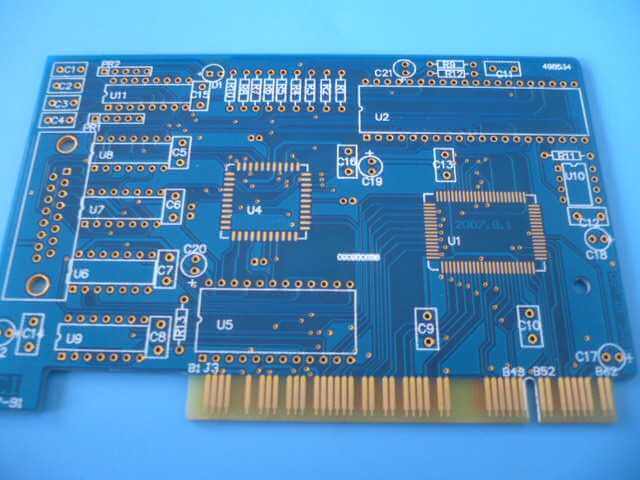
The cost of the gold-plated plate process is the highest among all plates. But at present, it is the most stable and most suitable for use in lead-free process plates among all the existing plates. Especially for some high-unit price or high-reliability electronic products, the board serves as the base material.
The OSP process has the lowest cost and is easy to operate. However, this process requires assembly plants to modify equipment and process conditions and has poor reworkability. Therefore, the popularity is still not good. Using this type of sheet material, after being heated at high temperature, the protective film pre-coated on the PAD is bound to be destroyed, resulting in a decrease in solderability. Especially when the substrate undergoes secondary reflow, the situation becomes more serious. Therefore, if the process needs to go through a DIP process again, the DIP end will face the challenge of soldering at this time.
Although “silver” has strong mobility, which leads to the occurrence of electric leakage. Today’s “immersion silver plating” is not simply metallic silver, but “organic silver” co-plated with organic substances.
Therefore, it has been able to meet the requirements of the future lead-free process, and its solderability life is longer than that of the OSP board.
The biggest problem of this type of substrate is the “BlackPad” problem. Therefore, many large manufacturers do not agree to use the lead-free process, but most manufacturers use this process.
This kind of substrate is easy to be contaminated and scratched. In addition, the process (FLUX) will cause oxidation and discoloration. Most manufacturers do not use this process, and the cost is relatively high.
Because of its low cost, good solderability, high reliability, and the strongest compatibility, this type of spray tin plate with good soldering characteristics contains lead, so the lead-free process cannot be used.
There is also a “tin-silver copper-sprayed tin plate”. Because most of them do not use this process, so it is difficult to obtain characteristic data.