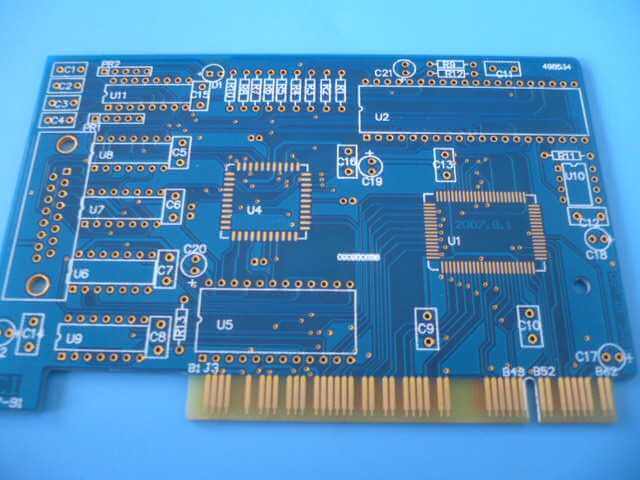







In SMT industry, AOI inspection is essential. What is AOI testing? AOI stands for Automatic Optical Detector. It is a new device that has only become popular in recent years. It can automatically patrol, automatically alarm, display abnormalities, and fully realize automation. I will introduce the principles and advantages of AOI detection in SMT.
Principle: Use the optical principle to scan the PCB with the camera on the device, collect images, and compare the collected solder joint data with the qualified data in the machine database, and after image processing, mark the PCB soldering status.
As some electronic products are becoming smaller and smaller, PCB circuit boards are becoming more and more sophisticated, and the difficulty of manual inspection of PCB boards is increasing. The inspection speed is slower than that of machines. Long-term inspections are also prone to eye fatigue and missed inspections. In order to increase work efficiency, AOI can reflect its excellence.
The advantages of AOI are as follows:
Although AOI detection has great advantages over manual inspection, AOI detection is not a panacea, and there will be technical blind spots, resulting in misjudgment, and then manual judgment is required to ensure product quality.